01
Flavanols & procyanidins
Cocoa is one of the richest dietary sources of flavanols, especially epicatechin. These compounds are studied for vascular function, blood-flow support and cognitive health.
Insights
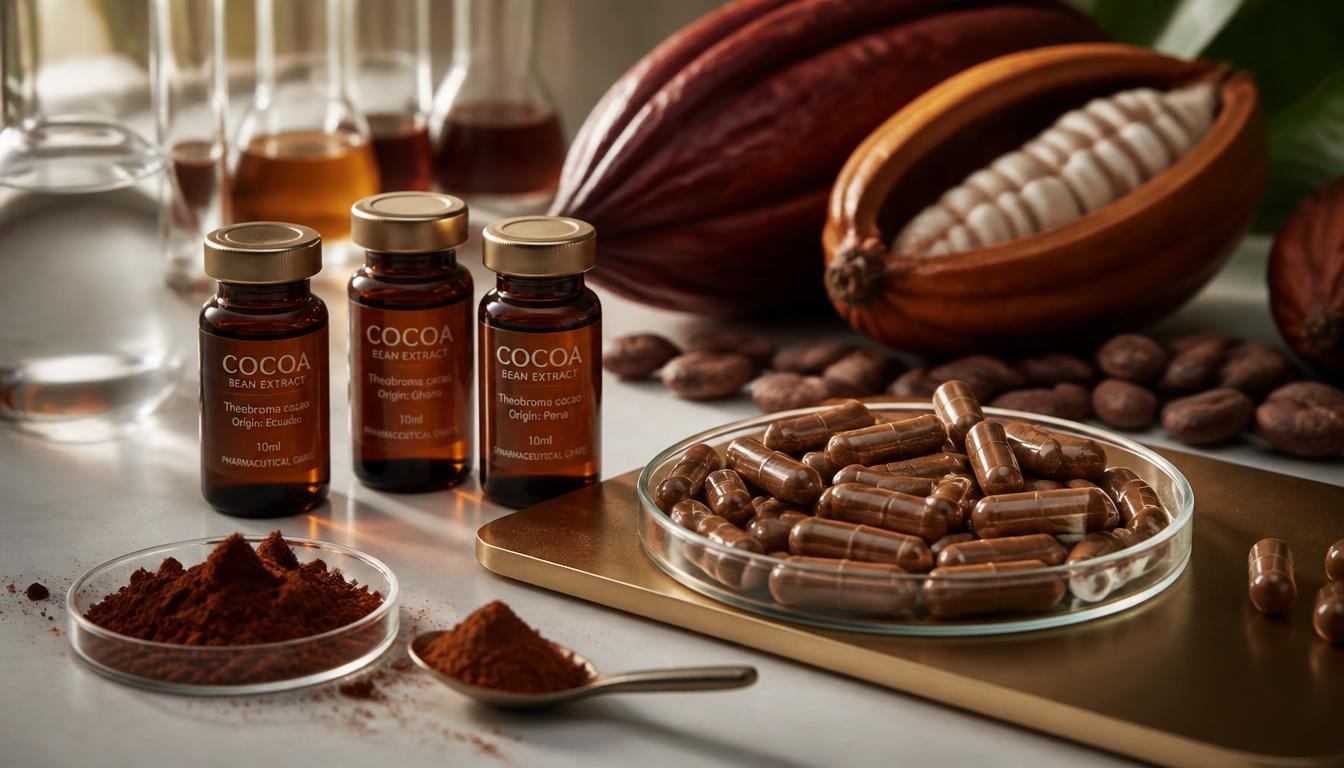
From pod to bioactive ingredient: the cocoa compounds driving pharmaceutical and functional-health innovation, and how West Africa can become a supplier of high-value extracts.
Why it matters
Pharmaceutical and nutraceutical buyers pay for standardised actives: flavanols with a verified profile, theobromine at a defined purity, cocoa butter that meets pharmacopeia specs. These are higher-margin products than commodity beans, and they require a scientific bridge between origin and industry.
The Cocoa Bridge Alliance connects research institutions, quality labs and processing partners in West Africa with brands looking for traceable, high-purity cocoa-derived ingredients.
Bioactive compounds
01
Cocoa is one of the richest dietary sources of flavanols, especially epicatechin. These compounds are studied for vascular function, blood-flow support and cognitive health.
02
A mild alkaloid found naturally in cocoa. Theobromine is used in cough suppressants and respiratory formulations, and is studied as a gentler alternative to caffeine.
03
A stable, skin-friendly fat with a narrow melting range. Pharmaceutical-grade cocoa butter is used in suppositories, topical bases and controlled-release formulations.
04
Standardised cocoa extracts concentrate antioxidant polyphenols for supplements, functional foods and cosmeceutical research.
05
Cocoa shell and cake are rich in fibre and contain functional proteins. These are explored for gut-health, prebiotic and plant-protein applications.
Cocoa flavanols
Cocoa flavanols are a family of polyphenols — epicatechin, catechin and the larger procyanidins — concentrated in the raw bean. Gram for gram, unprocessed cocoa is among the richest dietary sources known, ahead of tea, red wine and most berries.
The catch is processing. Fermentation, roasting and above all alkalisation (Dutch processing) destroy a large share of the flavanol content — which is why two cocoa powders on the same shelf can differ by an order of magnitude. Preserving flavanols therefore starts at origin, with fermentation and drying protocols, not in the factory at the end of the chain.
Human trials have concentrated on the vascular system: high-flavanol cocoa is associated with improved endothelial function and peripheral blood flow, modest reductions in blood pressure, and measurable increases in cerebral blood flow linked to attention and working memory. Effects are dose-dependent and require a standardised, verified flavanol content — which is exactly what industrial buyers pay a premium for.
Theobromine
Theobromine is the compound that makes cocoa cocoa. A methylxanthine like caffeine, it is a markedly weaker central-nervous-system stimulant with a longer half-life — which is why cocoa produces a steadier lift without the sharp peak and crash. Cocoa solids typically contain several times more theobromine than caffeine.
Pharmacologically it acts as a bronchodilator and mild diuretic, with a long history in cough and respiratory preparations, and it has been studied for cough suppression and for vascular effects. Regulatory and formulation interest today centres on purified theobromine as a gentler stimulant for functional beverages, sports nutrition and cognitive-support products.
Theobromine is also recoverable from cocoa shell — a by-product usually burned or discarded at origin. Extracting it turns a waste stream into a pharmaceutical-grade input, which is one of the clearest value-capture opportunities for producing countries.
Applications
High-flavanol cocoa extracts are among the most studied natural ingredients for endothelial function, blood-pressure support and insulin sensitivity.
Flavanol-rich cocoa is being investigated for its effects on cerebral blood flow, attention and age-related cognitive decline.
Theobromine is a long-standing ingredient in traditional cough preparations and is still used in modern OTC respiratory products.
Cocoa butter's emollient properties and oxidation stability make it a preferred excipient for dermatological creams, balms and wound-care products.
Read next: Cocoa processing at origin → · Cocoa in cosmetics →
FAQ
CBA brings together researchers, processors and brands to build a reliable supply of pharmaceutical and nutraceutical cocoa ingredients. Meet the ecosystem at CIDS 2027.
Extraction, grades, skin and food uses, and why pressing at origin matters.
From bean to butter, powder, liquor and by-products.
Pod husks, shells and mucilage turned into green materials.